
In the world of juicing, the Breville Citrus Press vs Pro debate is a popular topic among health enthusiasts and kitchen aficionados. These two high-quality kitchen appliances are known for their efficiency, durability, and ease of use, allowing you to enjoy fresh citrus juice any time you want. In this in-depth comparison, we will explore the features and benefits of both the Breville Citrus Press and the Breville Citrus Press Pro, so you can make an informed decision on which model best suits your needs. Whether you’re a seasoned juicer or someone looking to enhance your daily nutrition, the Breville Citrus Press vs Pro comparison will provide you with all the information you need to make the right choice.
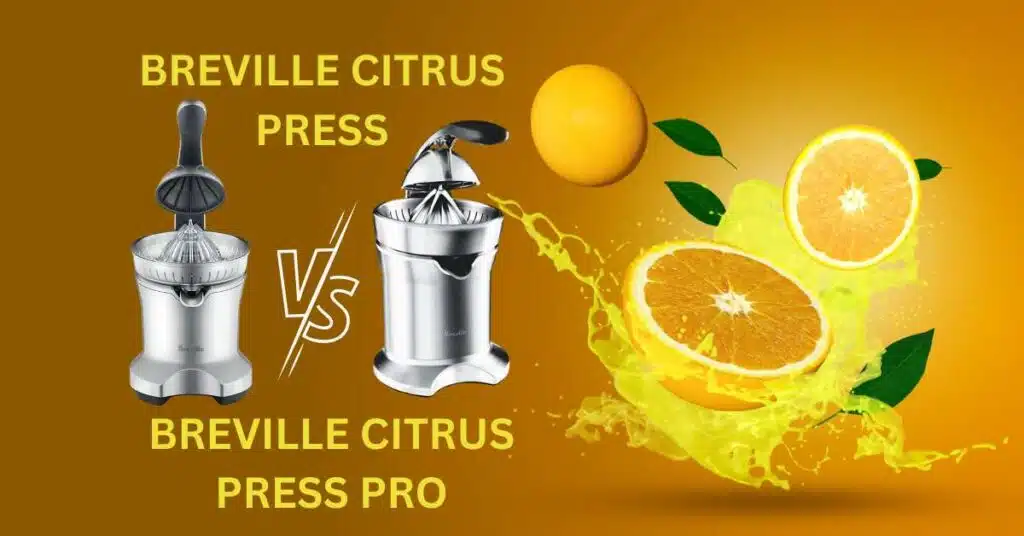
Key Differences between Breville Citrus Press and Pro Juicer
The main difference between the Breville Citrus Press and the Breville Citrus Press Pro is that The Breville Citrus Press (BCP600SIL) is made of plastic, whereas the Breville Citrus Press Pro (800CPXL) is built with stainless steel. This difference in material significantly impacts their durability, aesthetics, and overall quality.
Design and Construction:
The Breville Citrus Press Pro features a professional-grade, brushed stainless steel design that gives it a sleek and modern appearance. In contrast, the Breville Citrus Press has a silver plastic construction, which may not be as durable or visually appealing as the stainless steel Pro version.
Juicing Cone:
Both models come with uniquely designed juicing cones, but they differ in their structure. The Breville Citrus Press has a finned juicing cone and fruit dome to provide grip and pressure for maximum juice extraction, while the Breville Citrus Press Pro uses a Quadra-Fin acid-resistant cone to extract juice efficiently from all sizes of citrus fruits.
Weight and Dimensions:
The Breville Citrus Press is lighter, weighing 7.1 pounds, and has dimensions of 7.5″D x 9.5″W x 18″H. On the other hand, the Breville Citrus Press Pro weighs 11 pounds and measures 10.3″D x 14″W x 7.6″H. The Pro’s larger size and heavier weight may provide more stability during use but may also take up more countertop space.
Special Features:
The Breville Citrus Press has a unique alcohol-free feature, while the Breville Citrus Press Pro is described as a manual juicer. Additionally, the Pro model has a die-cast, acid-resistant juicing cone, making it more resistant to corrosion from citric acid.
| Feature | Breville Citrus Press (BCP600SIL) | Breville Citrus Press Pro (800CPXL) |
|---|---|---|
| Brand | Breville | Breville |
| Color | Silver | Brushed Stainless |
| Special Feature | Alcohol-Free | Manual |
| Product Dimensions | 7.5"D x 9.5"W x 18"H | 10.3"D x 14"W x 7.6"H |
| Material | Plastic | Stainless Steel |
| Juicing Cone | Finned Cone and Fruit Dome | Quadra-Fin Acid-Resistant Cone |
| Dual Switch Safety | Yes | Yes |
| Drip Stop Juice Spout | Yes | Yes |
| Magnetic Fruit Dome | Yes | No (Removable Fruit Dome) |
| Dishwasher Safe | Yes | Yes |
| Warranty | 1 Year Limited Product Warranty | 1 Year Limited Product Warranty |
| Power | 110 Watts | 110 Watts |
| Voltage | 110 to 120 Volts | 110 to 120 Volts |
| Weight | 7.1 Pounds | 11 Pounds |
| Blade Material | Stainless Steel | Stainless Steel |
| Finish Type | Silver | Steel |
| Product Care Instructions | 1 | Dishwasher Safe |
| Price | Buy on Amazon | Buy on Amazon |
Overview of Breville BCP600SIL Citrus Press Motorized Juicer, Silver
The Breville Citrus Press is a motorized juicer that provides fresh juice without the effort, from the smallest lime to the largest grapefruit. With a simple one-handed operation, it allows you to create delicious juice with minimal effort. The juicer features a finned juicing cone and fruit dome that provide grip and pressure to provide maximum juice extraction. You can squeeze every last drop of juice from the smallest lime to the largest grapefruit from the same cone. It also has a dual switch safety feature that ensures downward pressure is placed directly onto the fruit to maximize juice yield.
Compared to the Breville Citrus Press Pro, the Breville Citrus Press is a more affordable option. While it may not have as many advanced features as the Citrus Press Pro, it still gets the job done. The Citrus Press is perfect for those who want a simple, no-fuss juicer that can handle all sizes of citrus fruits. It has a sleek, silver finish that will look great on any kitchen countertop.
One of the standout features of the Breville Citrus Press is its drip stop juice spout, which holds juice back to avoid spillage onto your countertop. It also has a magnetic fruit dome that is easy to remove and replace for cleaning. The juicer is dishwasher safe, making clean-up a breeze. Overall, the Breville Citrus Press is a great option for those who want an easy-to-use juicer that delivers fresh juice without the hassle.
The Breville Citrus Press is an excellent choice for those who want a motorized juicer that can handle all sizes of citrus fruits. It may not have as many advanced features as the Citrus Press Pro, but it is still a great option for those who want a simple, affordable juicer. With its finned juicing cone, dual switch safety feature, and drip stop juice spout, the Breville Citrus Press is a great investment for anyone who loves fresh citrus juice. Whether you’re making juice for yourself or for a crowd, the Breville Citrus Press will get the job done quickly and efficiently.
Pros √
- Easy to use
- Finned juicing cone and fruit dome provides grip and pressure to maximize juice extraction
- One size fits all juicing cone
- Dual switch safety system
Cons ×
- Smaller capacity than some other
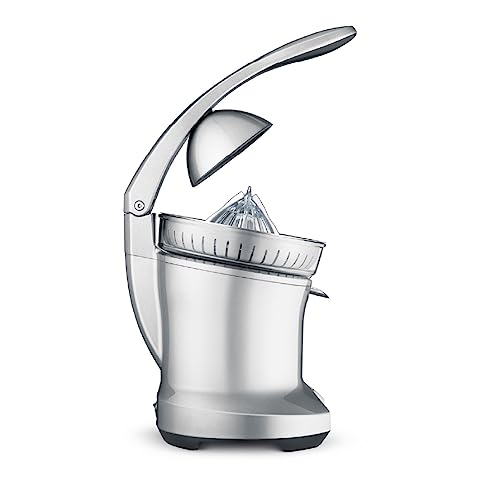
- The Breville Citrus Press is a motorized juicer that provides you fresh juice without the...
- ONE SIZE FITS ALL JUICING CONE: The finned juicing cone and fruit dome provides grip and...
Overview of Breville Citrus Press Pro Electric Juicer, Stainless Steel, 800CPXL
The Breville Citrus Press Pro is a powerful and durable electric juicer designed for citrus fruits of all sizes. Its active-arm press with power-assisted lever makes pressing fruits effortless, and the Quadra-Fin acid-resistant cone maximizes the extraction of all citrus fruits with ease. The juicing cone design is uniquely finned and undulated to extract the maximum juice from all sizes of citrus fruit, and it’s dishwasher safe. The Breville Citrus Press Pro offers more variety, more juice, and less fuss than the Breville Citrus Press.
Compared to the Breville Citrus Press, the Breville Citrus Press Pro is a more advanced and high-end option. It features an 800-watt motor, which is significantly more powerful than the 110-watt motor of the Citrus Press. The Citrus Press Pro also has a dual switch safety feature that ensures downward pressure throughout the juicing process, and it comes with a convenient and innovative drip stop system which holds juice back to avoid spillage onto your countertop.
The Breville Citrus Press Pro is a professional-style juicer that will enhance any kitchen countertop. It has a die-cast stainless steel juicing cone that fits all sizes of citrus fruits, and it boasts innovative juicing action for maximum juice extraction. The juicer also comes with two stainless steel filters for variable pulp control. With its powerful motor and durable design, the Breville Citrus Press Pro is a great investment for anyone who loves fresh citrus juice.
The Breville Citrus Press Pro is a high-end electric juicer that offers more variety, more juice, and less fuss than the Breville Citrus Press. Its powerful motor, unique juicing cone design, and dual switch safety feature make it a top choice for anyone who wants to enjoy fresh citrus juice with minimal effort. Whether you’re making juice for yourself or for a crowd, the Breville Citrus Press Pro will deliver the perfect amount of juice every time.
Pros √
- Powerful 800-watt motor
- Quadra-Fin acid-resistant cone for maximum juice extraction
- Active-arm press with power-assisted lever
- Dual-switch safety system
Cons ×
- More expensive than the Citrus Press
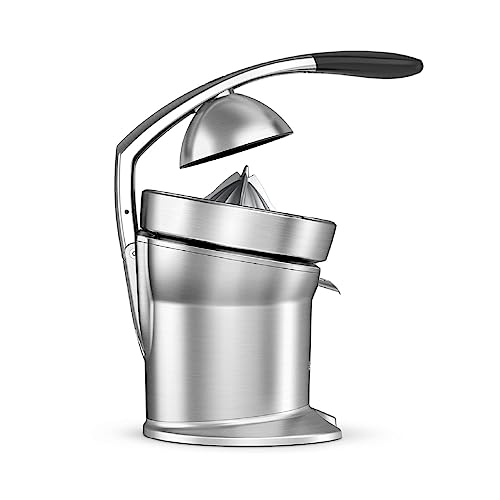
- The Breville Citrus Press Pro offers more variety, more juice with less fuss; Its...
- QUADRA-FIN JUICING CONE: The juicing cone design is uniquely finned and undulated to...
Conclusion
In the end, choosing between the Breville Citrus Press and the Breville Citrus Press Pro comes down to your specific needs. If you’re looking for a simple, affordable juicer that can handle all sizes of citrus fruits, the Citrus Press is a great choice. However, if you need a heavy-duty option that can handle larger quantities of fruit and has more advanced features, the Citrus Press Pro is definitely worth considering.
Ultimately, the winner of this comparison depends on what you’re looking for in a juicer. Both models have their strengths and weaknesses, so it’s important to consider your own needs and preferences before making a decision. No matter which option you choose, you can’t go wrong with a high-quality Breville juicer for delicious, fresh citrus juice at home.







Leave a Comment